
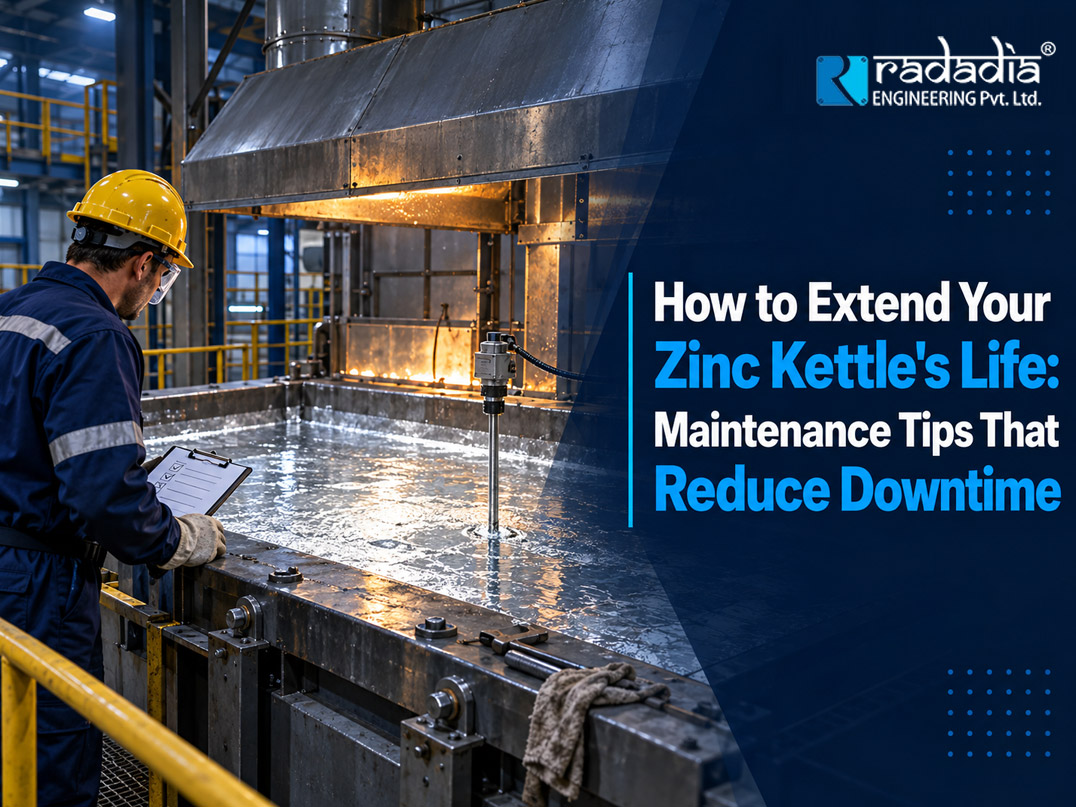
Zinc Kettle is among the most important and essential parts of a hot-dip galvanizing line. Due to the nature of its operating environment, it becomes extremely important to perform maintenance for its efficient operation.
Proper maintenance of the kettle may go a long way in helping to minimize the chances of breakdowns, expensive repairs, and ensuring timely production. As far as galvanizing plant owners are concerned, the objective should not just be solving the problems, but also preventing any potential problems from occurring.
Consistent temperature control is essential for efficient galvanizing. Excessive or uneven heating can place unnecessary thermal stress on the kettle and may contribute to premature deterioration.
Operators should regularly monitor temperature readings and ensure that heating systems and controls are functioning correctly. Maintaining stable operating conditions is one of the simplest ways to protect a Zinc kettle for galvanizing.
Dross accumulation can affect both production efficiency and kettle operation. Regularly monitoring the zinc bath and removing accumulated dross according to the plant's operating procedures can help maintain a cleaner working environment.
Operators should also avoid unnecessary mechanical contact with the kettle during cleaning and maintenance activities.
Inspections may detect early signs of damage, deformity, corrosion, or wear. The schedule for inspection must be recorded, and any abnormal findings must be thoroughly examined.
Cooperation with a professional galvanizing kettle producer will also assist operators in adopting proper practices of maintenance according to the design of the kettle.
Improper shutdown and restart procedures can create unnecessary thermal stress. Operators should follow controlled heating and cooling procedures recommended for their specific kettle and furnace system.
Avoiding sudden temperature changes can contribute to longer kettle service life and more predictable operation.
A correctly functioning cover system ensures that heat is retained, heat loss is minimized, and good working conditions are maintained in and around the kettle.
Insulation damage, poor fitting covers, or faulty mechanisms may affect the efficiency of the process. A well-functioning galvanizing kettle cover system must thus be regularly checked.
Preventive maintenance is more effective than waiting for a major failure. Inspection of burners, temperature controls, lifting mechanisms, covers, insulation, and associated equipment should be planned according to operating hours and manufacturer recommendations.
For facilities using a zinc kettle galvanizing plant, maintaining accurate service records can also help identify recurring issues and support better maintenance planning.
Engineering and choice of materials characterize the initial stage of the kettle’s lifespan. All of the above aspects contribute to the overall performance of the kettle.
It is highly important to choose an experienced galvanizing kettle manufacturer and operate it in accordance with recommendations to preserve your investment.
A zinc kettle represents a significant investment, and its service life directly affects plant productivity and operating costs. Consistent monitoring, preventive maintenance, proper operating practices, and timely technical support can make a substantial difference.
Radadia Engineering provides engineered solutions for galvanizing operations, including kettle-related systems designed with practical plant requirements in mind.
Contact Radadia Engineering to discuss your galvanizing equipment requirements and build a maintenance approach that supports longer equipment life, safer operation, and reduced downtime.