
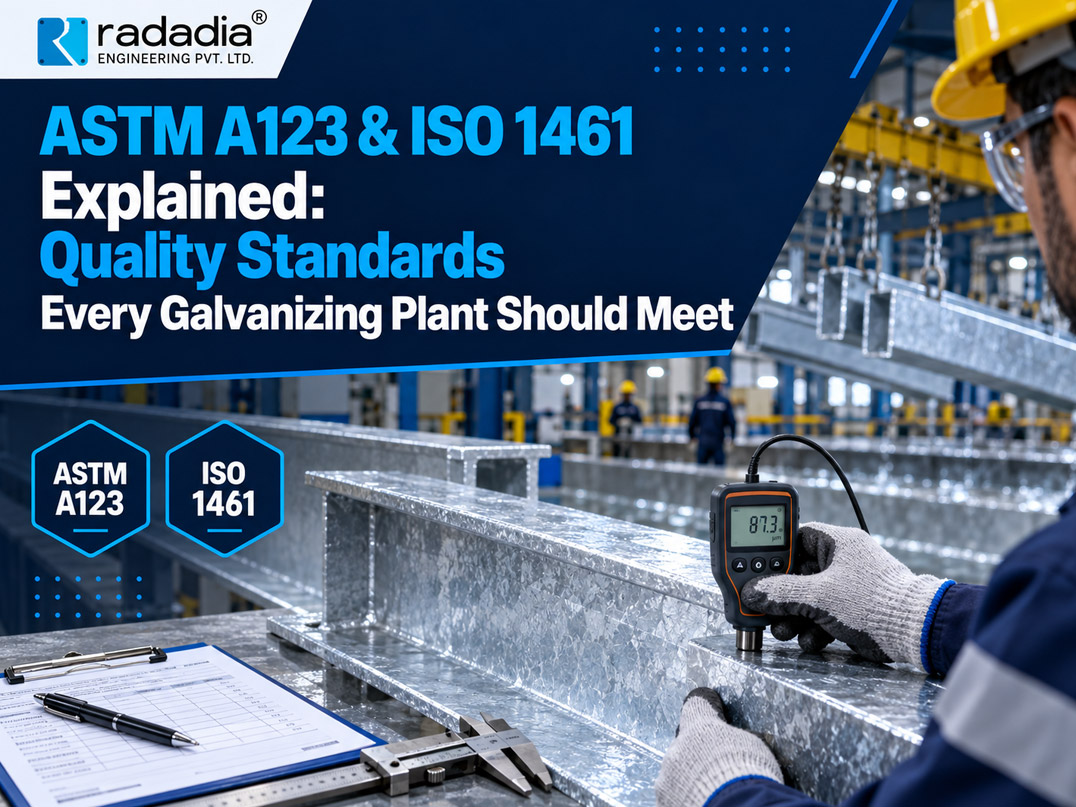
Hot-dip galvanizing is one of the best ways to prevent corrosion of steel structures. But the formation of a corrosion-resistant zinc coating is not just about dipping steel into the zinc bath. There are many factors that need to be taken into account for achieving an optimal result.
ASTM A123 and ISO 1461 are some of the standards that galvanizers need to understand when dealing with customers in the domestic and international market environment. The standards provide useful guidelines on the quality of galvanized coatings.
The ASTM A123 standard is an American standard that is widely used to define zinc coatings through hot-dip galvanizing to steel and iron items. This standard defines coating thickness, coating appearance, adhesion properties, and inspection requirements.
The ISO 1461 standard is an international standard that provides general requirements and testing procedures for hot-dip galvanized coatings to iron and steel products.
Although the standards have differences in their specifications and application, both emphasize consistent coating quality and appropriate inspection practices.
Meeting galvanizing standards begins with the complete process not only the galvanizing kettle. Degreasing, pickling, rinsing, fluxing, drying, galvanizing, cooling, and material handling all influence the final zinc coating.
This makes selecting the right hot dip galvanizing plant Equipment manufacturer an important decision. Properly engineered equipment helps maintain critical process parameters, improve material handling, and reduce common coating issues such as bare spots, excessive zinc buildup, uneven coatings, and dross formation.
The plant should also be designed according to the products being galvanized, expected production capacity, kettle dimensions, and required level of automation.
Radadia Engineering develops galvanizing plant solutions with a focus on process control, operational efficiency, and consistent performance. The company understands that galvanizers may have different production volumes, product sizes, layouts, and coating requirements.
As an experienced hot dip galvanizing plant Equipment manufacturer, Radadia Engineering integrates equipment and process stages to create a smoother and more controlled galvanizing operation.
The objective is not simply to install individual machines. It is to develop an integrated system that supports repeatable results and helps galvanizers work toward the desired coating requirements specified by applicable standards.
A complete hot dip galvanizing plant brings different stages of the galvanizing process together. This can include pre-treatment systems, fluxing, drying, galvanizing, cooling, material handling, and associated process equipment.
Proper integration between these stages helps improve process consistency and production efficiency. It also gives galvanizers greater control over the factors that influence zinc coating quality.
For international buyers in markets such as the USA and Gulf region, this level of process control can be particularly valuable when customers require consistent and standards-oriented galvanizing results.
Achieving consistent galvanizing results starts with the right combination of process knowledge and engineering. Radadia Engineering can help galvanizers develop a complete hot dip galvanizing plant aligned with their production requirements and quality objectives.
Contact Radadia Engineering today to discuss your galvanizing plant project and build a reliable solution designed for consistent, standards-oriented coating performance.